

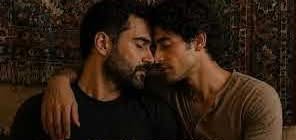
Written by Barry M. Putt, Jr. and directed by Robert Liebowitz, Omeed’s Tapestries is a jarring and provocative tale of love, freedom, fear, and deceit. In a small tapestry shop in Esfahan, Omeed and his partner, Afshar, plan their escape from Iran to a country where they can wed without fear of persecution. The couple, played by Kamran Taherpour and Amuri Nabeel, live a normal and fairly pious domestic life: by day, they run the shop, and by night, they can be themselves. Their peaceful lives and dreams of the future are abruptly cut short when a conservative neighbor seeking personal gain discovers their secret relationship, blackmails them and, eventually, gets them thrown in jail.
The simplicity of the set—a few tables and chairs—exemplifies the several subtleties—in acting and character development—that bring the play to life. Taherpour and Nabeel act with precision, switching effortlessly from emotional outpourings to gentle, loving derisions. The other actors clearly take their roles gravely, each carrying with them the sense that the tragic story they’re helping to tell is somewhat real, especially in parts of the world where homosexuality is a capital offense, punishable by death.
While Putt masterfully builds and maintains tension throughout the story, the plot is not without its lulls. In the beginning, it unrolls slowly. Once the characters are established, events start to take place that swiftly sweep the audience along. But after an exciting climax, in which Omeed and Afshar are apprehended by police, beaten and thrown in jail, the story once again starts to dull. The neighbor, Farbod, played by Umer Farooq, who exposed the gay relationship, has many conversations throughout this period. He has been seeking a promotion at work, which has served as his sole motivation for his unneighborly actions. Farbod’s fate, however, pales in comparison to the one which the audience desperately wants to know: that of Afshar, who remains in jail after Omeed is let go.
Of Afshar’s fate, Putt does not hold back. Beaten, mutilated, and eventually murdered, his tragic end is difficult to watch. The playwright was wise not to water down this fate, which has befallen many men and women in the real world. Like it began, the story ends in subtlety: Omeed standing alone on stage preparing to flee, when the stage lights go out. For a moment, the audience wonders what will happen next, and the lack of an answer incites an awareness that, in the dark auditorium, makes them put their hands together.


