


The centerpiece of the 2026 Midtown International Theatre Festival, And This One’s True, enchants its characters as well as its audience. Written and performed by Laura Hooper and directed by Emma Canalese, the one-woman play may act as a complement to the canon of theatre’s charming obsession with the dead and dying.
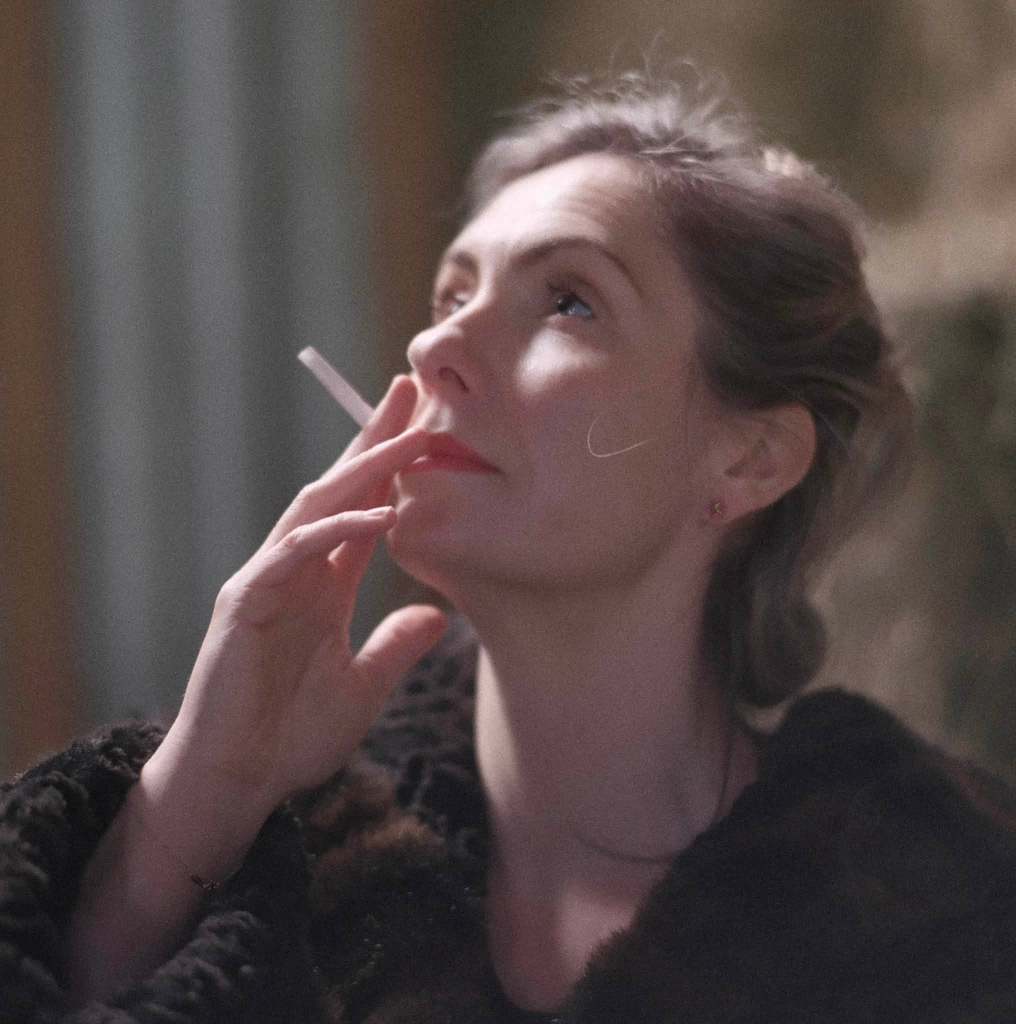
The show begins with an ending, or so it seems. A heart rate monitor flatlines, and 92-year-old Mamie, laying in bed, awakens with a yell, her arm reaching out. The old woman takes in the scene of her death. In doing so, she notices the audience, whose presence delights her and, more importantly, distracts her. Speaking directly to us as she tells the story of her life—even asking, at times, for our participation—she wills us to take part in the illusion that she, herself, hides within.
Mamie is spry for an old woman, and witty and cheerful. These quirks engage the audience through the archetypal events of her life: growing up in London during World War II, living with an alcoholic father, settling in with various gentlemen before settling down with one who spirits her overseas, giving birth to three children, and later travelling to visit them and her grandchildren. The intrigue is not these events, however deftly expressed by Hooper’s sharp posturing. It is, instead, the underlying distraction: a mysterious, interjecting voice that Mamie hears, voiced by herself—her spiritual guide to the afterlife.
Hooper herself is a powerhouse of improvisation and engagement. At one point, for example, a young audience member who returns to the theatre is greeted by Mamie just at the moment she is trying to recall the names of her grandchildren. In one line, “Come in dear, take a seat,” Hooper seamlessly connects the meat of Mamie’s story to the pulse of the audience. Her few minor word stumbles can hardly be a mark against her, considering the extra challenge of acting alone on stage for 90 minutes.
Spirituality, we come to see, is the true heart of this play, although its integration is questionable. For instance, after a near death experience earlier in her life, Mamie and her husband start participating in seances. But the explanation ends there, and the normal life events that follow sharpen the disconnect between Mamie’s life and this spiritual journey. The spiritual guide often sounds more like a generic horoscope than an all-powerful spirit. “Spirit is with you always,” he says at one point, “Surrender the ego.” The ending sows more detachment as the spirit guide reveals his 3,000-year-old relationship between Mamie (who once went by Mary) and himself. This late twist is not felt deeply, rather succeeds in confusing the audience, making us wonder why it’s significant, at all.

 ARTIUM: OMNI