


Jay Michaels speaks with company founder Barnaby Edwards.

Barnaby Edwards and his team have a mission not unfamiliar in the world of independent theatre — To cultivate and inspire collaboration among emerging theatre artists and to develop new works that explore the wide range of human emotions. But they do it using a daring array of lesser known, even forgotten work of theatre. Regeneration tackled an early play dealing with terminal diseases: The Shadow Box; the political powder keg, Kennedy’s Children; a cold-war parable, Small Craft Warning; a blunt deeply moving early AIDS play, AS IS, and one of the first plays dealing with trans-individuals, Come Back to the Five and Dine Jimmy Dean. And now they have a musical that hints at the housing crisis. This is what a theatre company is supposed to do enlighten while entertaining — peppering this with nostalgia certainly adds to their charm.
We spoke with Barnaby about their return (they stopped production during the pandemic).
Welcome back! Regeneration Theater. Where have you been?
BE: Basically recovering from the enforced COVID break. We were lucky that our acclaimed production of The Shadow Box was one of the last Off-Off Broadway productions to be presented before the shutdown, and without illness. Since then we have been carefully watching the best practices and calculating when we could return, and now is the time when the stars aligned. It’s been a very tough few years for the indie theatre scene in NYC. A lot of performance spaces have closed, a lot of organizations have reduced the amount of work they are able to do, and the costs of everything have increased.
Barnaby, tell us about you as an artist. What made you form the company, what’s your mission, etc?
BE: I’m basically a theatre omnivore and always learning. You learn something from every show you see and get involved with. My first love was always musicals, but there were a number of organizations doing neglected musicals in New York, but not so much of late 20th century plays, by American Playwrights that needed a second look. And so Regeneration Theatre was born. We have presented second looks at work by Arthur Miller and Tennessee Williams, along with plays by Robert Patrick, Michael Cristofer, and Willaim M Hoffman, and along the way found resonances with the challenges America faces today with the concerns of these deeply human writers.
Where do you find these rare classics? Is there a particular criteria or is it the fact that they were overlooked in their initial run good enough?
BE: i read a lot. Theatre history especially. And when I hear about a play that seems appealing I try to get hold of it and read it and see if it fits with our mission. It’s important to me that the work we do has some resonance today, where it’s making a political statement as with As Is, The Shadow Box, or Kennedy’s Children, or being able to take an audience on a voyage of discovery with a show they may think that they know something about, but are hopefully going to be surprised that it is more fun and better than they expected.
Here’s a tough one: why were they overlooked in the first place. What’s your supposition for what makes not a good play, but a popular play or musical? And why weren’t these one of them?
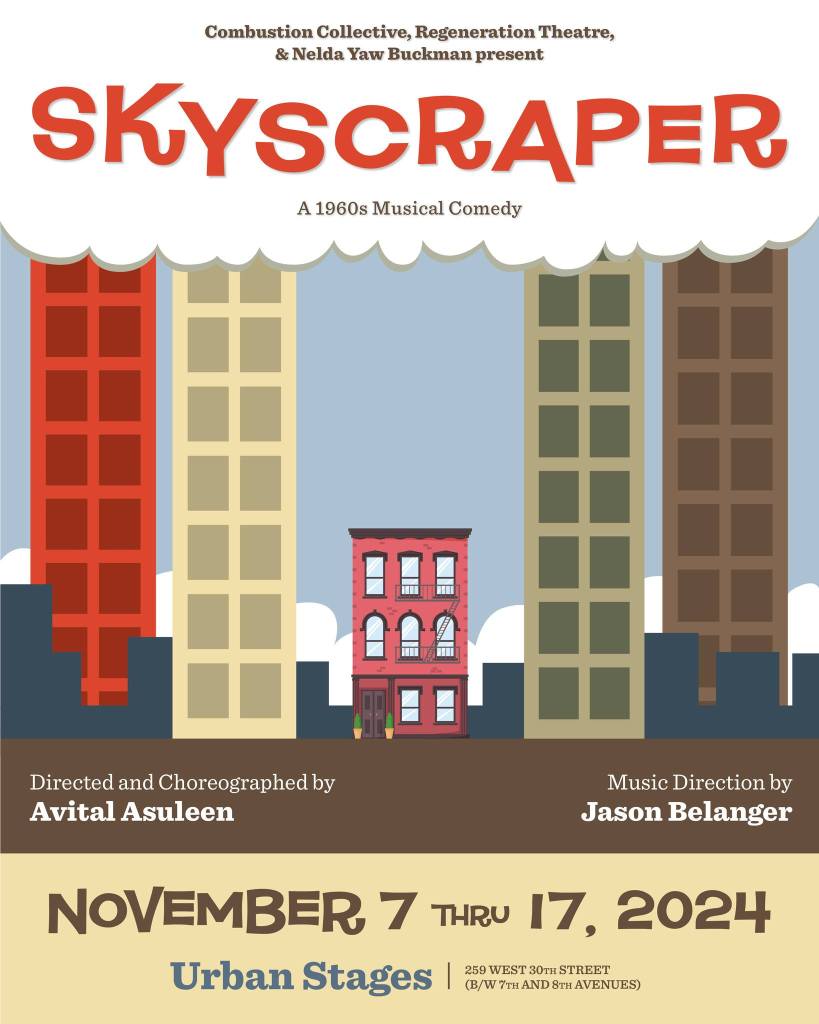
BE: There are so many reasons why a show succeeds or gets recognized. Sometimes it’s just a matter of timing. When Skyscraper opened in November 1965, change was in the air for Broadway musicals. We were about a year away from Cabaret, and the social turmoil of the 60s was accelerating. This old fashioned show, which was cobbled together from 2 ideas that the producers Feuer and Martin had (a show about a Skyscraper and an adaptation of Dream Girl by Elmer Rice), was perhaps a few years too late. It also had the notorious bad luck to get a terrible review from Dorothy Kilgallen, the female equivalent of Walter Winchell while still in previews. A few days later she was dead in suspicious circumstances, although the stories are that that had more to do with her claim to know who really killed JFK than her dislike of Skyscraper. When the show actually opened a week or so later the reviews were positive overall. They were well short of raves, but they were not complete pans at all.
Now let’s get specific: why Skyscraper? Why now?
BE: I have always had a soft spot for Skyscraper. I started talking to Avital, our director/choreographer on the show, in Jan 2020 about it being our fall show, after discovering she too had a fondness for the show. I think it’s a bit of a neglected gem. It’s funny and the songs are great. The cast album does it an injustice, since the great Julie Harris was no singer, and the sound is not the greatest. We have done our research and put back in 2 songs that were cut in Detroit. This show was actually a text book example of out of town trouble. It played 6 weeks in Detroit with a storyline that was a lot more like Dream Girl and with a different lead actor (Victor Spinetti). By the time it reached Broadway, Spinetti had been replaced by Charles Nelson Reilly, the book is almost unrecognizable, and 75% of the score was new. One of the songs on the cast album was not even present opening night, but added 4-6 weeks later. We have added back in a couple of the Detroit songs, one of which has never been recorded to my knowledge, and slotted them seamlessly into Peter Stone’s book with no added dialog.
But to answer your why now question? Don’t we all need a fun musical that only demands that we laugh, tap our toes and hum the tunes?
Is this your first musical with the company? What are the new challenges?
BE: Yes, this is the first full scale musical Regeneration Theatre has undertaken, although I personally have been involved in producing Rags and Lift in 2013 and 2014 for Beautiful Soup Theatre. Indie theatre is challenging even with 3-4 person plays, but a musical amplifies those challenges. There is now music and sound to be considered, plus choreography. It takes a bigger team, and a bigger budget.,
I’ve noticed you have collaborators on this. How does that benefit a production? And what obstacles does it create?
BE: To be able to bring a musical to the stage, even on this scale takes a village, and so having Combustion Collective on board helps us pay people more than we would otherwise be able to, and accommodate a larger cast and production. It means we also have to communicate together well, and a lot. (Our group chat is VERY extensive) The additional perspectives will also just make the work better and we are all passionate and believe in the show and what we are doing with it.
Along that same question, were the new challenges now that you’ve returned post covid.
BE: This is going to be a familiar story. Everything costs more. There are fewer spaces to present Indie theatre, and to rehearse shows. And, of course, the challenges artists face tobe able to make ends meet in New York are even more clear, and while this is very low budget theatre, we want to be able to do what we can to contribute there too.. That is why it has taken so long to restart. During the lockdown we experimented with virtual theatre, which was a godsend for our family of performers, and we have done some readings, but the time finally came to take the plunge with a full production.
Philosophical question. Can a play be popular and unpopular? Can it be a hit on Broadway and be nominated for a Tony but then go nowhere? Why? I’m thinking of musicals like redhead and Merrily we roll along.
BE: Short answer. All of the above. I mean, there are folks who cannot stand Wicked or Phantom, and even A Chorus Line. Theatre is inherently subjective and different people respond differently to different shows. To take the two shows you mention, Merrily has always had it’s passionate fans, and it won’t surprise you to learn that I am among them, but it took the alchemy of the magical cast in the most recent revival for it to become massively popular. Redhead is a show that was so tailored to the unique talents of Gwen Verdon, and staged for her strengths by Bob Fosse that it is less likely to meet a similar fate. I am, of course, hoping audiences respond to Skyscraper more like Merrily we roll along, or at least have a fun time and the theatre and leave with a smile on their faces.
What’s next?
BE: After we sleep for a month you mean? Regeneration is looking at two or three plays for our next production, which we uncovered during the virtual readings we were able to do during covid lockdowns, and depending how Skyscraper goes there could be another musical on the horizon, and Combustion Collective has some other projects in the offing too! Keep an eye on our websites.

 ARTIUM: OMNI