

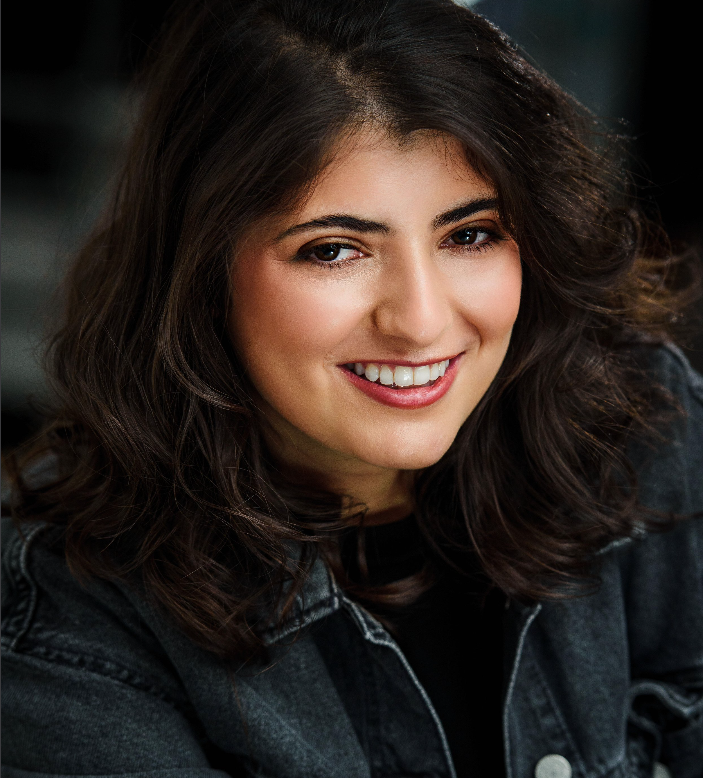
“I’m a jack-of-all-trades in the art world. You could also call me a multi-hyphenate artist—I act, dance, write, compose… you name it. But more than anything, I see myself as a change maker,” so explains Palestinian artist, LOUR YASIN – and rightfully so with stage and film projects abounding with her name connected to them.
She began her journey in Jerusalem and the West Bank, where she performed in everything from plays to concerts. Then she noticed there were very few in the professional entertainment industry like her. This did not settle well with her. “I wasn’t about to sit around waiting for someone to give me a shot. So, I took matters into my own hands and started writing. I wanted to see more representation for SWANA performers like me, so I penned “AREA D,”
AREA D is a musical set in the Middle East that uplifts marginalized communities. And then she did “Ben & Jerry’s,” a whimsical play about a magical ice cream shop in a settlement that turns people into ice cream cakes. She also performed in the very first Middle Eastern opera, “One Thousand and One Nights,” taking the lead role at the cultural palace at age 15! Additionally, she fused pop and Middle Eastern music to help pioneer the Arab Pop genre in Jerusalem, and even dabbled in ghostwriting music for other artists.
We had to stop her or she would STILL be telling us what was happening.
“Art is powerful—it can create political and social change that sends waves through a community,” she said, with sudden seriousness., “representation is crucial because it can literally save lives. That’s why I believe in being a jack of all trades rather than a master of one. In today’s industry, you have to be versatile to survive.” A thought that all artists should consider.
She then shared her “master plan” with us. “My unique cultural background, coupled with my desire to have more representation, puts me in a unique position. I perform and write not just for myself, but for others in my community who may not see themselves reflected in mainstream media. When I told my dad I wanted to be an entertainer, he asked me to name five successful actors or singers from our community, and I couldn’t come up with a single one. That’s when I knew my job as an artist was about more than just making art—it was about paving the way for others like me. So, when the next aspiring artist from my community tells their parents they want to work in entertainment, they’ll have a name to say: mine.”
We had to learn more about this high-energy artist and started with a sci-fi thriller she is currently working on shot ON LOCATION in the Middle East:
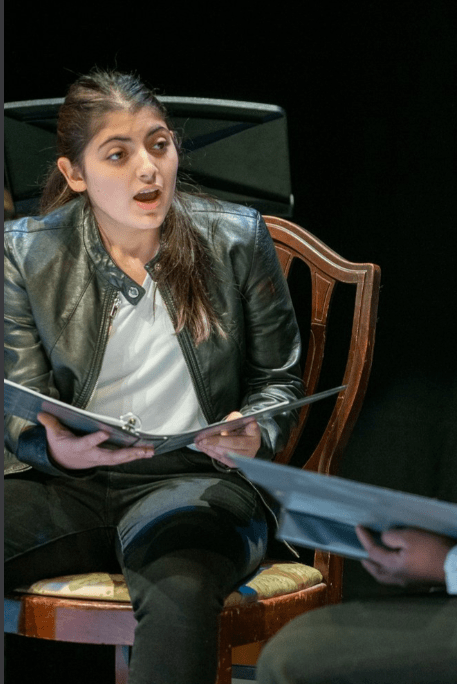
The Shift sounds daring to say the least, how did you get involved?
Getting involved with “The Shift” series was quite the journey. It all started about two years ago when I auditioned for the casting directors at TaleBox Casting agency in Jordan. Despite not auditioning specifically for “The Shift,” one of the casting directors saw something in me and referred me to the producers of the series. It was a bit unconventional since they weren’t holding open auditions, but thanks to that referral, I got my foot in the door. After several rounds of auditions and callbacks, I landed the role of Tara. It’s been an exciting ride ever since.
I didn’t know what I was auditioning for originally because they used fake dummy scripts for secrecy. But after the third audition, they gave me the actual script and told me what the show was about, and I couldn’t be more excited. Sci-fi is my favorite genre. I know a lot of actors don’t love sci-fi because you’re mainly working with green screens, but I love the challenge, especially since your imagination truly has to work overtime to get you there. It’s exhilarating, and I thrive on that kind of challenge.
What obstacles are you and the production company facing now in working on the film – especially “on location.”
Shooting “on location” poses significant challenges, particularly in Jerusalem where filming faces restrictions due to the heavy military presence, especially near Damascus Gate. Navigating checkpoints and the political climate adds complexity to our process.
To mitigate these challenges, discussions have arisen about moving the shoot entirely indoors to Olivewood Film Studios in Jordan. While this offers a more controlled environment, it requires significant adjustments to our production schedule and logistics.
Our journey began with a test pilot in Jerusalem just before the SAG strike in mid-June 2023. We paused production in solidarity with the actors and writers of the SAG strike. Resuming shooting in September, we faced another setback due to the unstable political situation in the city and country.
These interruptions are particularly challenging as our project is still in the development stage. Unlike greenlit productions, we’re still exploring possibilities, especially as “The Shift” pioneers as the first sci-fi show with a SWANA lead. Though unconventional, our flexible approach allows us to experiment and refine our show, even amidst production challenges. Adapting to these circumstances is crucial as we continue navigating the complexities of bringing “The Shift” to life.
Has the film’s message changed in any way considering world events?
The message of the show remains unchanged. “The Shift” follows Tara, a teenage girl who discovers her ability to teleport following an incident at a checkpoint in Jerusalem. Growing up navigating checkpoints daily in Jerusalem, I often wished for the ability to teleport and bypass the segregation walls. However, in the real world, such powers don’t exist.
The setting of the show is somewhat dystopian, but the sci-fi aspect of teleportation contrasts sharply with the real-life elements of checkpoints, heavy military presence, and apartheid walls. These elements, which are part of everyday life, take on an otherworldly quality in the context of the show.
What’s particularly significant about “The Shift” is its portrayal of Tara as the first SWANA lead character in a sci-fi series. SWANA individuals are rarely represented in the genre, and the absence of such representation sends a message that their experiences are less significant than fictional concepts like dragons or teleportation.
In the show, Tara’s teleportation serves as a defense mechanism in high-stress situations, reflecting a privilege not afforded to individuals in real life. The aim of the series is to humanize Tara and her community, challenging stereotypes and highlighting the struggles faced by those living in colonized zones.
Given the current world events, the show’s themes of dehumanization and marginalization are particularly relevant. The political discourse surrounding these issues underscores the importance of portraying characters like Tara and confronting biases.
As a Palestinian, I’m eager for audiences to meet Tara and confront their biases. However, I remain hopeful that the show will be fully realized despite the challenges it faces.
PART II IN DRAMAQUEENSREVIEWS.COM

 ARTIUM: OMNI